Road transport plays two roles - a standalone European service and the closing leg of every sea, air or rail shipment
Market data update: October 2026
- Type
- Road transport (FTL, LTL)
- Route
- Europe - Poland, Germany, Czechia, Benelux, Scandinavia
- Cargo
- Full truckload and groupage · oversized cargo with pilot escort
- Status
- A standalone service and an integral part of intermodal shipments
- What is the maximum cargo weight in road transport?
- Is road transport only about delivery to the port?
- What documents are needed outside the EU?
- Which industries use road transport most often?
- Which destinations does road transport cover?
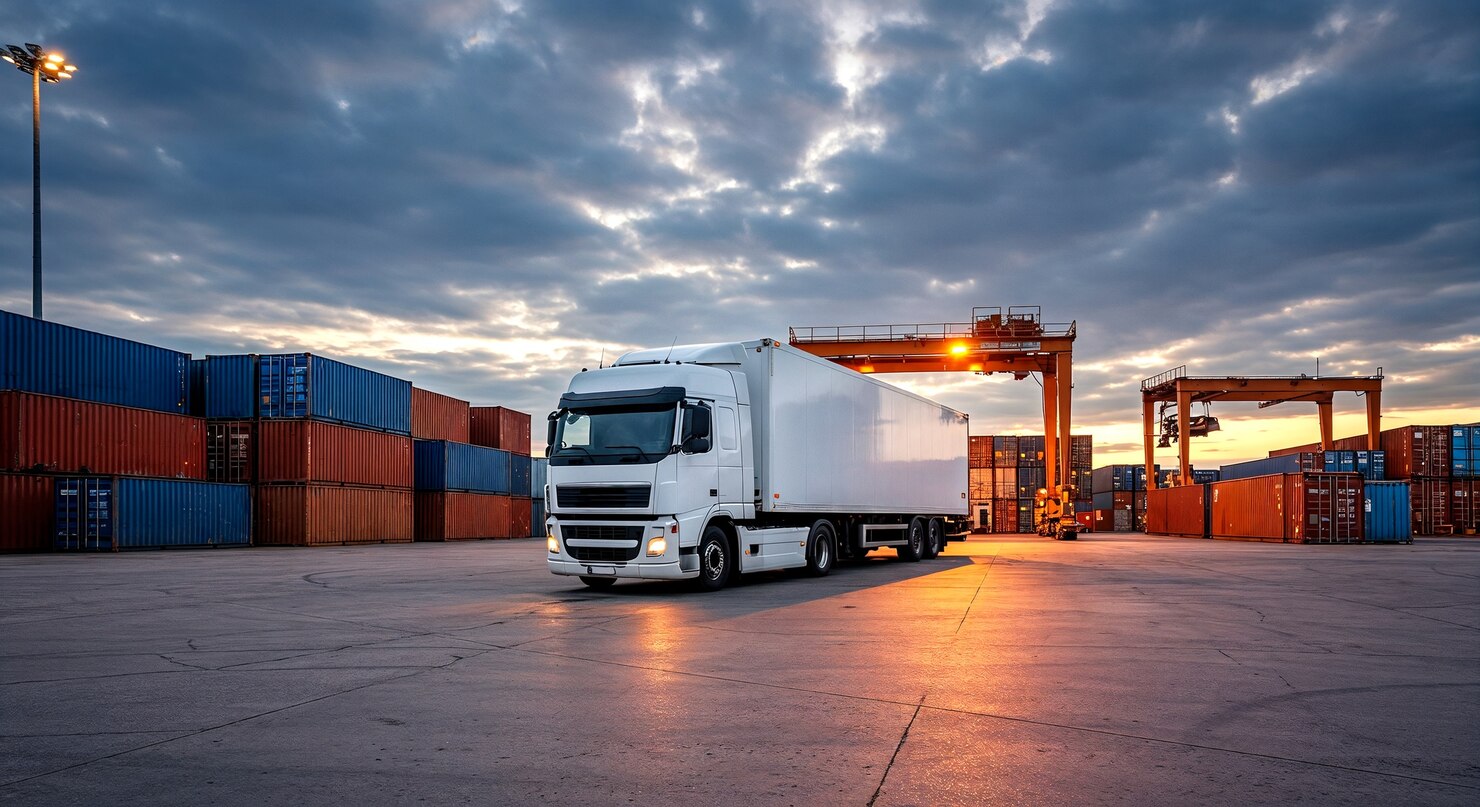
Road transport plays two different roles. As a standalone service it handles full truckload (FTL) and groupage (LTL) shipments in Poland and Europe. As part of an intermodal order it is the collection from the shipper before sea or air loading (pre-carriage) and the delivery to the final consignee after customs clearance (on-carriage).
Exactly what we already described for sea, air and rail transport - just from the other side of the ramp.
Poland has the largest share of international road transport in the European Union
According to Eurostat, road transport accounted for 25.7% of all freight transport performed in the EU in 2024 (measured in tonne-kilometres), and Poland had the largest share among EU countries in international road transport that same year - nearly a third (32.7%) of total volume.
Vehicles with a gross vehicle weight above 30 tonnes perform 83.1% of all road transport in the EU (measured in tonne-kilometres) - context for the standard 24 t cargo limit in full truckload transport discussed below.
Full truckload (FTL) handles cargo up to 24 tonnes, groupage (LTL) consolidates smaller shipments
A standard truck with a gross vehicle weight of 40 t carries up to about 24 t of cargo - the difference is the tare weight of the vehicle and trailer. For cargo that does not fill a whole vehicle, groupage transport (LTL) is used, combining shipments from several shippers on one run. The basic consignment document is the CMR note, valid in road transport across almost all of Europe.
Pre-carriage and on-carriage is the most common, though least visible, role of road transport
Before cargo reaches a vessel, aircraft or train, someone has to collect it from the shipper and deliver it to the port, airport or terminal - that is pre-carriage. After it arrives at the destination and clears customs, someone has to deliver it to the final consignee - that is on-carriage. In practice, most sea, air and rail transport orders contain a road leg, even if the client does not order it separately.
"Road transport is rarely the hero of this story - but without it none of the other services would close the loop. It collects the goods at the start and delivers them at the very end."
Oversized cargo requires pilot escorts, permits and a designated route
Carrying cargo that exceeds standard vehicle dimensions or weight requires category permits and a designated route, and often also a pilot escort - an accompanying vehicle securing the journey. The scope and availability of this service depends on the specific cargo and route.
When comparing road, sea, air and rail transport, start with cargo parameters
| Transport | Key advantage | Typical use |
|---|---|---|
| Road | Flexibility | Regional transport and door-to-door deliveries |
| Sea | Cost at large volumes | Long-haul routes, containers, larger lots |
| Air | Speed | Urgent and high-value shipments |
| Rail | A compromise between time and cost | Selected Europe-Asia connections |
The largest cargo categories in EU road transport are food, groupage shipments and agricultural products - not automotive
Contrary to intuition, road transport in the European Union most often carries not car parts or machinery, but food. Food products, beverages and tobacco are the largest commodity category in EU road transport measured in tonne-kilometres, followed closely by groupage shipments - mixed, consolidated consignments of different goods on one run - and agricultural, forestry and fishery products. Automotive, construction and the machinery industry do of course have their market share, but at the level of the whole EU they are not the leading categories.
Ukraine is a served destination, Belarus and Russia are outside the scope of the service
Most European destinations - Germany, Czechia, the Benelux countries, Scandinavia - are routes with predictable delivery times, limited mainly by drivers' working time regulations. Ukraine plays by different rules, but road transport does get there and traffic currently runs without major obstacles - it is the only working cargo corridor to and from that country, since air traffic is suspended and seaports are under restrictions. The situation at the border can change, so the delivery time is worth communicating with a caveat about possible fluctuations, but not as a service burdened with a constant risk of delay.
Belarus and Russia are not served. None of the above remarks about delivery time apply to them - they simply do not appear in the offer.
Summary - road transport is the foundation on which the rest of the forwarding offer rests
FAQ - road transport
Yes, road transport works both as part of comprehensive forwarding service (pre-carriage, on-carriage) and as a standalone domestic or international order.
Standard full truckload transport (FTL) handles cargo up to 24 t. Heavier or oversized cargo requires transport with pilot escort and permits.
Yes - road transport as pre-carriage to the port or airport, or as on-carriage from the terminal to the final consignee, can be part of a single intermodal order.
Road transport outside the European Union requires customs documentation - a CMR note, a T1 transit document and export or import documents.
Standardly Poland, Germany, Czechia, the Benelux countries and Scandinavia, as well as Ukraine - currently with smooth border traffic. Belarus and Russia are not served.
Request a road transport quote
Send us the cargo parameters and the route. We will come back with a quote.
54°32′N 18°33′E / CARTRAG / ROAD FREIGHT